Outdoor Gas Log Installation
Firelight on the Patio Year-Round
Outdoor Gas Log Installation in Oxford & Oakland, MS, for fire pits and outdoor fireplaces exposed to rain and humidity
Rebel Chimney and Masonry Service installs outdoor gas logs in Oxford and Oakland, MS, for homeowners who want a fire feature on the deck, patio, or near the pool without splitting wood, cleaning ash, or waiting for coals to die down before heading inside. Outdoor installations require burners, logs, and connections rated for weather exposure, including rain, temperature swings, and high humidity that can corrode standard indoor components within a season.
We install stainless steel burners designed for outdoor use, with sealed gas valves and ignition systems housed in weatherproof enclosures. Logs are made from refractory ceramic or tempered glass that won't crack or discolor from freeze-thaw cycles, and we position them to shed water off the burner surface when the fire isn't running. The gas line runs underground from your home's meter or from a dedicated propane tank placed at least ten feet from the fire feature, following Mississippi fuel gas code for buried piping and depth requirements.
Reach out to schedule a site visit so we can measure your fire pit, confirm gas line routing, and discuss burner size and log style.
How Outdoor Burners Differ From Indoor Models
Outdoor burners use thicker stainless steel pans with sealed ports that prevent water from pooling inside the gas manifold, and the ignition module mounts in a waterproof junction box to protect the spark generator and wiring from rain. We route the gas line through schedule 40 PVC conduit when it runs underground, then transition to black iron pipe above grade before connecting to the burner valve. For propane installations, we install a two-stage regulator at the tank and a secondary regulator at the burner to maintain steady pressure when the fire runs for more than an hour.
After installation, the fire pit or outdoor fireplace lights with a knob turn or electronic ignition button, and the flame stays consistent even when wind gusts across the patio. The logs won't show white calcium deposits or surface pitting, and the burner will ignite in wet conditions as long as the pilot orifice stays clear.
We set the burner height so flames rise above the log tops without reaching overhanging tree branches, pergola beams, or covered porch ceilings. This service includes burner placement, gas line connection, log arrangement, and ignition testing, but does not cover hardscaping, fire pit construction, or stone veneer work around the feature.
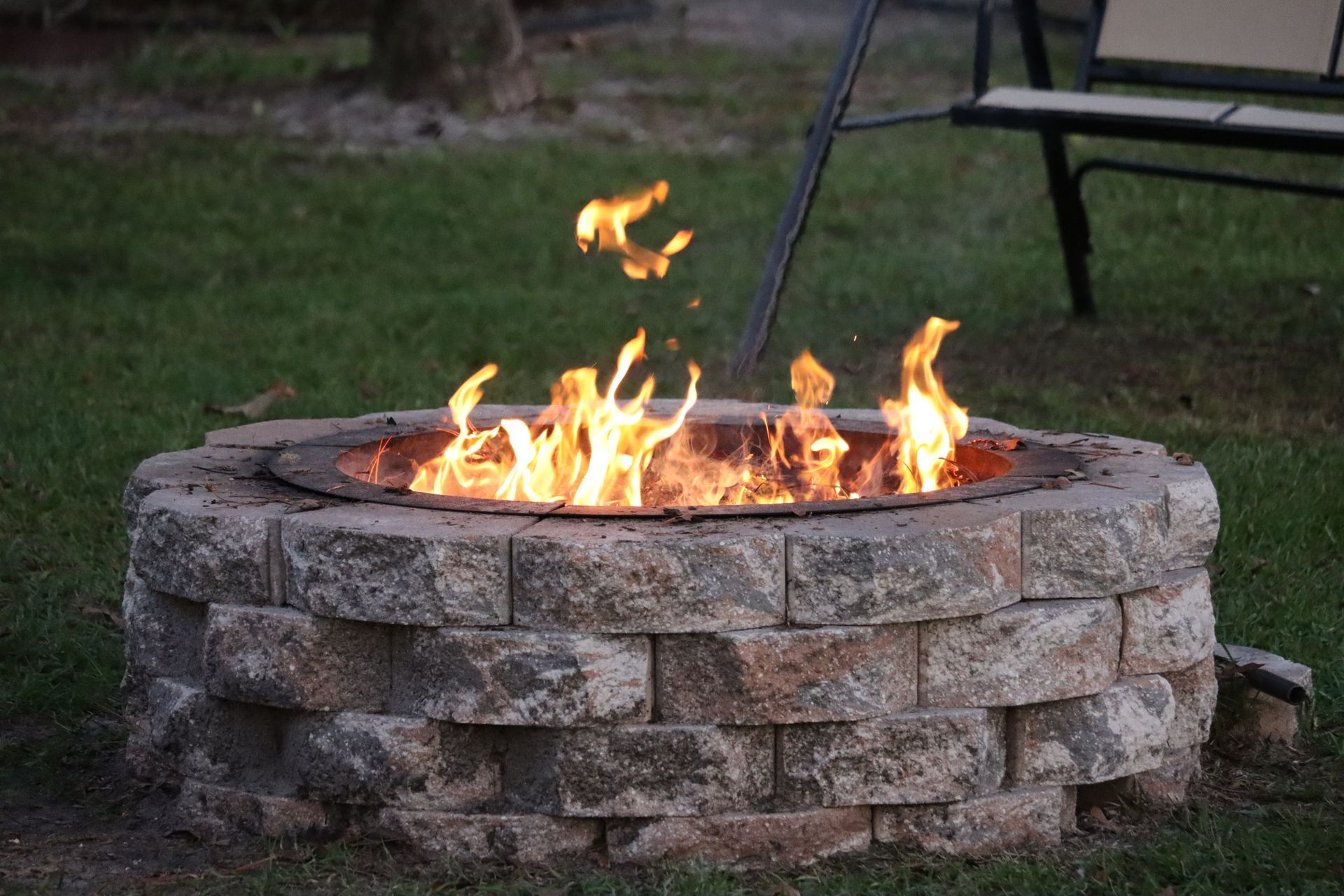
Rebel Chimney and Masonry Service sizes every outdoor gas log installation to your fire pit dimensions and tests ignition in wet conditions before we finish. Get in touch to review burner options and schedule your outdoor installation.
What to Know Before Installing an Outdoor Fire Feature
Homeowners often ask how deep we bury the gas line, whether propane or natural gas works better for outdoor use, and what happens if rain pools on the burner surface between uses.
How deep do you bury the gas line for outdoor installations?
We bury natural gas lines at least 18 inches deep and propane lines at least 12 inches deep, following Mississippi fuel gas code. The line runs through schedule 40 PVC conduit to protect it from root growth and ground shifting, then transitions to black iron pipe above grade.
What prevents the burner from rusting in outdoor conditions?
We install stainless steel burners with sealed ports and corrosion-resistant valves rated for continuous outdoor exposure. The ignition module sits inside a weatherproof enclosure, and we apply dielectric grease to electrical connections to block moisture infiltration.
Why does the flame height drop after running for an hour?
Flame height usually drops when propane pressure decreases as the tank cools during extended use. We install a two-stage regulator system to stabilize pressure and prevent flame fluctuation, even when the tank level falls below 25 percent.
How do you keep rainwater out of the burner pan?
We position the logs so they slope water off the burner surface, and we drill weep holes in the pan corners to let pooled water drain before you ignite the fire. You should brush off the logs and vacuum the burner ports after heavy rain to clear debris.
What clearance do you need around an outdoor fire feature in Oxford?
We maintain at least ten feet of clearance from combustible structures like wood fences, pergolas, and siding, and three feet from plantings or mulch beds. Local codes may require additional setback from property lines, which we confirm during the site visit.